
The Golden Thread
Keeping faith with the stories of the saints

Listen to this post as a podcast:
Last year, I was commissioned by Dorling Kindersley publishers to write the text for a lavishly illustrated children’s book on the lives of the saints, to be published on Thursday, 6th August, 2026.
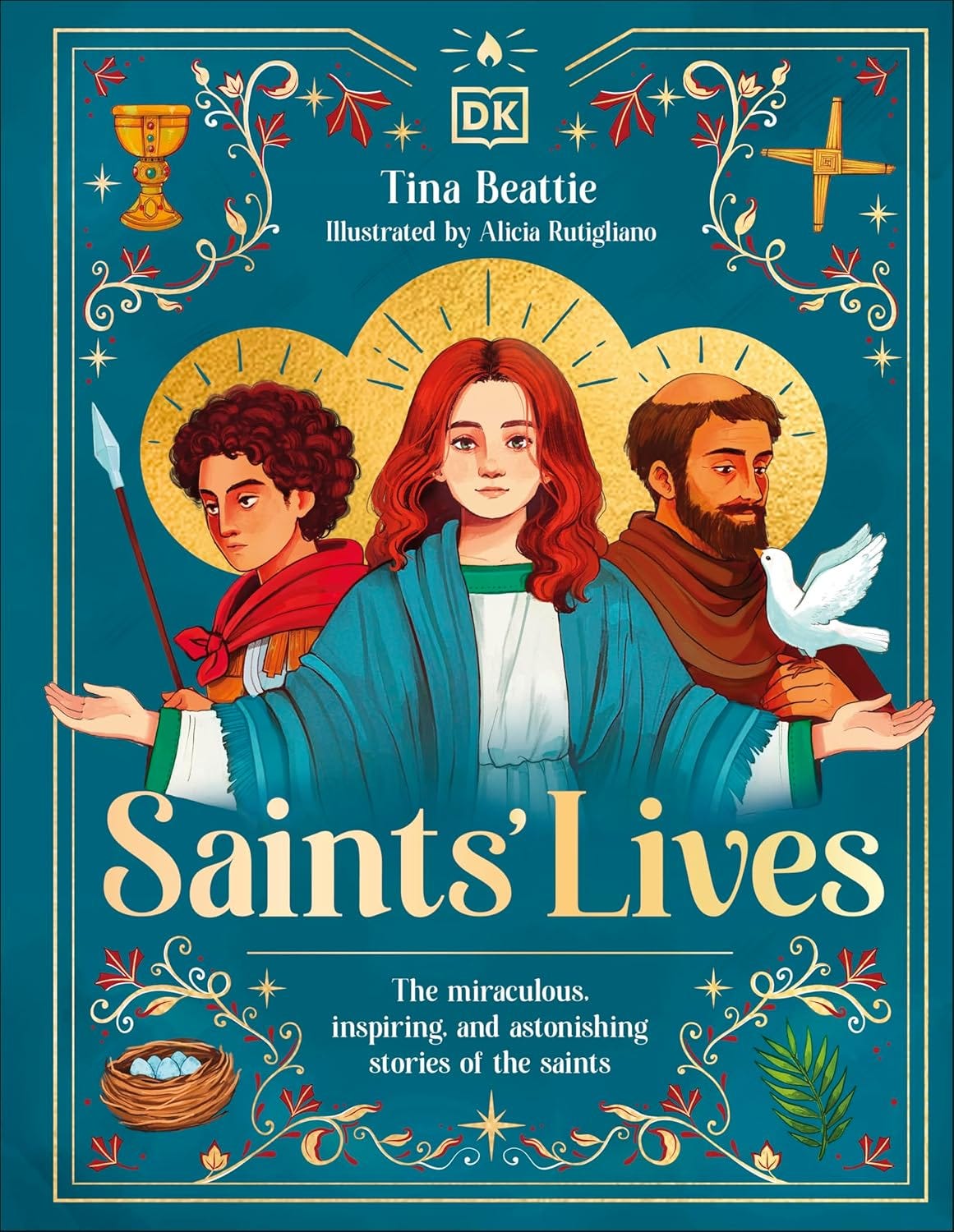
I began compiling a list of modern saints who exemplify justice and goodness relevant to today’s world, but the publisher had other ideas. This was to be a book about dragons and demons, miracles and martyrdoms, legends and folklore.
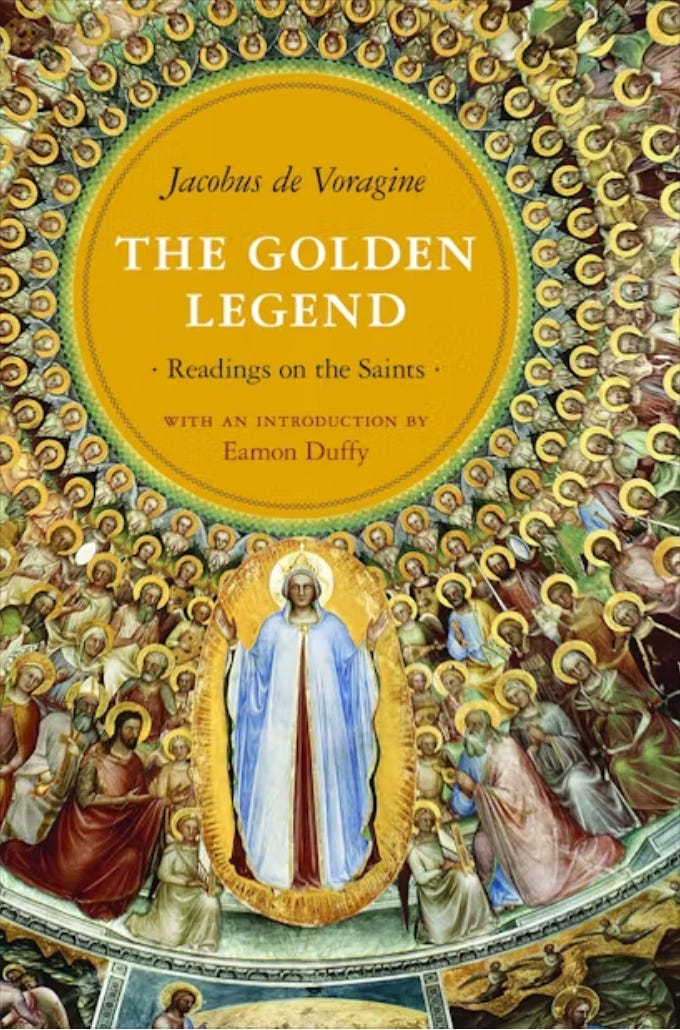
I bought a recent edition of The Golden Legend with an introduction by Eamon Duffy (reasoning to myself that his name surely gave it some gravitas and credibility), plunging into ancient and medieval stories of astonishing vivacity and variety, and augmenting my reading with dozens of other books and articles.
The Dorling Kindersley book ranges across the centuries from the Virgin Mary, Saint Anne and early martyrs of legend such as Valentine, Lucy, and Nicholas, to more modern and historically verifiable stories of saints such as Martin of Porres and Bernadette of Lourdes. We encounter saints who survive all manner of torture before being martyred for refusing to submit to the dictates of emperors and rulers, others who befriend animals or slay dragons, women and girls who bedazzle and enrage powerful rulers with their courage and wisdom, wealthy noblemen who give everything away to embark on wild, adventurous missions to preach the Gospel.
The Hallmarks of Sainthood
Gradually, as I immersed myself in these improbable stories, certain themes began to emerge. On one level, they are as dramatic as any modern retelling of the age-old conflict between good and evil, heroes and villains. These are sources of fascination for children whose imagination hasn’t been smothered by the pious banalities of domesticated Christianity. But on another level, there is a deep charge that resonates through these saintly lives, however fantastic or far-fetched they might seem.
I was, of course, selective, but even so, there was a treasure trove of saints to choose from. Common characteristics and themes emerged, leading me to see that saintly lives share certain hallmarks. First and foremost, there is, of course, faith—an unwavering trust that Christ shines his light on even the most painful and challenging path of discipleship and redeems even the most humiliating failures. This, in turn, produces qualities of courage and perseverance, a sublime confidence and boldness in the face of terrifying threats and punishments. In many of the stories, there’s a sense of harmonious interaction between saints and the natural world—a hill rises beneath Saint David’s feet so that his audience can see and hear him; a spring of fresh water bubbles up out of the ground on the spot where Bernadette Soubiros (Bernadette of Lourdes) shocked onlookers by drinking from a muddy puddle; otters dried Saint Cuthbert’s feet and warmed him with their breath after he’d been standing in the North Sea all night reciting the psalms. We discover the story of St Francis and the wolf, the possible origins of the Loch Ness Monster, and the lion that befriended Saint Jerome. I have spent the last few months inhabiting a world of enchantment, and it now shapes how I understand sainthood. I’ve come to recognise that there is a golden thread running through their stories, connecting generations of faith across cultures and contexts, and keeping alive the most fundamental characteristics of the Christian life amidst the many failures and abuses of the institutional church.
Encountering the Saints
Most days, I read about the saints’ feast days featured in the Missal, and there I discern the same patterns and characteristics. We hear so much today about inclusivity and diversity, but the cult of the saints exhibits both these qualities in abundance. For example, three saints share 1st February as their feast day—St Brigid (c. 451-525), St Henry Morse (1596-1645), and Blessed Benedict Daswa (1946-1990).
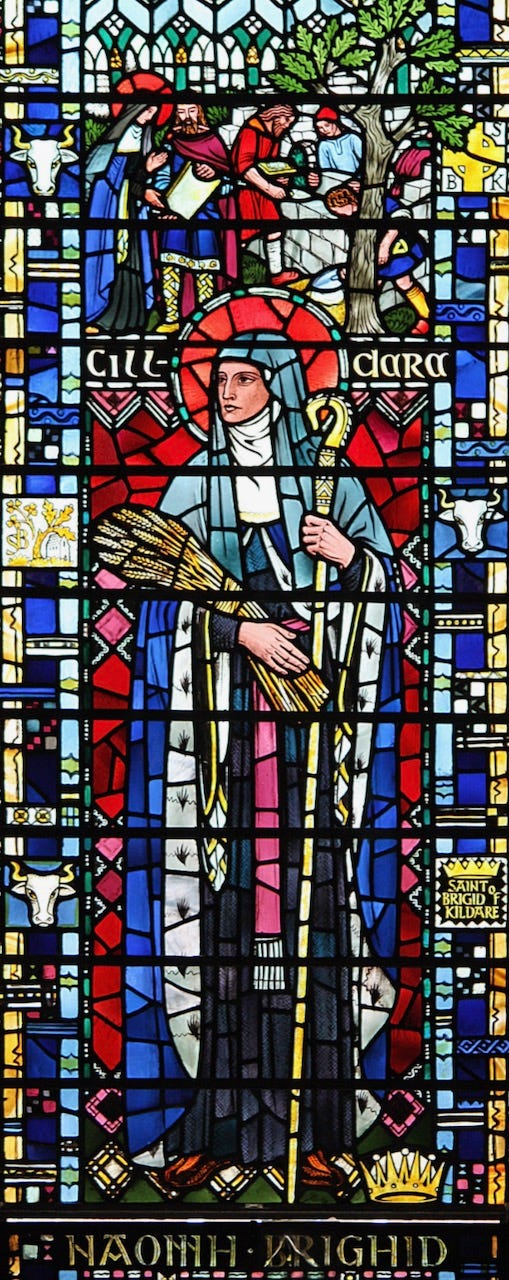
St Brigid or Bride bears the name of the pagan goddess of fire in Irish mythology. The Substack post below is an interesting reflection on the erasure of the genuine qualities of the saint by the mythical qualities of the goddess!

Brigid founded a double monastery of monks and nuns in Ireland. Legend tells of how she duped the king into granting her a large tract of land for a new monastery. He laughed at her request and agreed to give her only as much land as she could cover with her cloak. Giving the corners of her cloak to her women companions, she told them to keep walking backwards as the cloak miraculously grew until it covered the whole area she had originally asked for. The amazed king thereafter became a benefactor of the monastery and supplied all its needs.
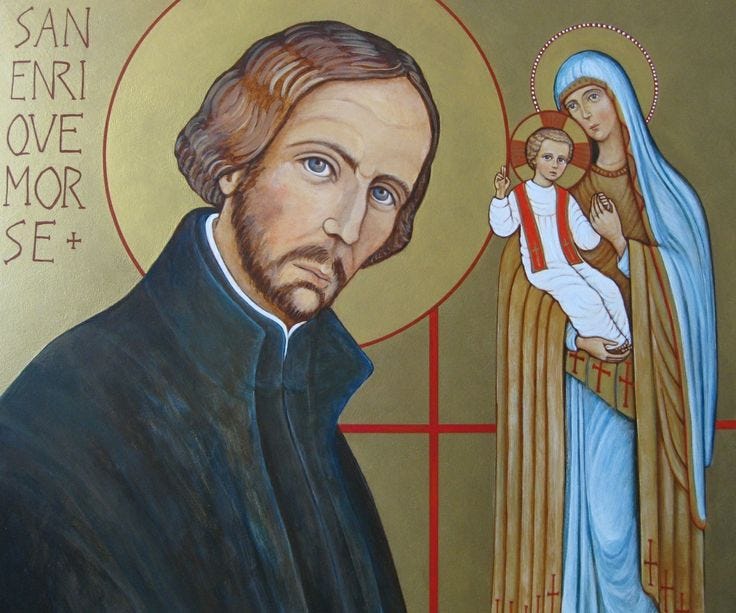
St Henry Morse, a convert to Catholicism, was martyred for his resistance to the English Reformation. He spent much of his adult life in exile, dodging persecution. During periods of return to England, he spent years in prison, and also dedicated himself to nursing plague victims. He himself caught the plague but recovered. Eventually, he was hanged, drawn, and quartered. As in the ancient legends and hagiographies, these early modern saints endured many tortures and persecutions intended to break them, but they died proclaiming their faith. We should, of course, remember that English Catholics had no monopoly on martyrdom. Under the reign of Catholic Queen Mary (“Bloody Mary”), many Protestants suffered a similar fate. No wonder Pope Francis referred to “an ecumenism of blood”.
Blessed Benedict Daswa was born into a poor family in Transvaal, South Africa. “Blessed” is the title given to those who are on the path to sainthood but have not yet been officially declared saints (canonised). His family followed traditional African religious practices and lived generous, hospitable lives despite their poverty. Benedict converted to Catholicism in 1963 at the age of seventeen. He qualified as a teacher and was known for his hard work and support for poor children and their families. He was mocked, not only for his Catholic faith, which he practised quietly but devoutly, but also because he shared the chores such as washing nappies and fetching water with his wife, Shadi. Such domesticity was not regarded as appropriate for a man. Benedict died a savage death at the hands of a mob, who were angry because he resisted their belief in witchcraft and condemned the persecution of witches.

Secularism, Sin, and Sainthood
Writing this as the scandals and horrors of the Epstein Files are slowly revealed, I’ve been reflecting on the saints’ examples of personal integrity, voluntary poverty, and resistance to abusive and tyrannical power, even to the point of martyrdom. Christianity offers no insulation against the corrupting seductions of wealth, power, and ambition, as is evident from the many prominent Christians who are in the forefront of today’s Far Right political movements. But the checks and balances that Christianity once offered in the face of violent abuses of power have been lost with the rise of secularism, and with modern capitalism’s commodification of all that lives and breathes. There are now no shared values embedded in our institutions and communicated through our religious communities and practices to offer a collective account of goodness and justice to counteract such abuses. Nor is there any threat of a Last Judgment, which enabled ancient and medieval saints to instil the fear of God into tyrannical religious and secular rulers. Dante condemned tyrants and popes alike to hell for their violence and abuse.
The men in the Epstein Files acted with impunity and, while some now face prosecution, the power of the law might be an inadequate substitute for the wrath and judgment of God. This is not the place to explore such neuralgic theological issues, but the teachings of Jesus in the Gospels reserve their most harsh and punitive judgments for those who worship wealth, and who exploit, oppress, or neglect the poor and the vulnerable.


I wrote a Substack post last year after listening to Rory Stewart, Alasdair Campbell, and Anthony Scaramucci discussing the 2025 World Economic Forum in Davos, Switzerland, in their podcast, “The Rest is Politics”. What stood out was their observation about the hypocrisy and cowardice of the world’s leaders gathered there, in their reluctance to speak out and their acceptance that bullying and humiliation were the price they must pay for their precarious perch in politics.
The saints are those who abjure wealth and ambition, whose faith empowers them to defy even the most tyrannical rulers. Their stories and legends abound with accounts of kingly power being confronted and constrained by appeals to divine justice, of saints refusing every kind of bribe and reward, however lavish, to persuade them to give up their faith and worship other gods. There are saints who resisted all forms of violence, who expressed their love of nature in the care they showed to all living creatures (vegetarians have many allies among them), and who appealed on behalf of the enslaved and exploited. They bore witness to a transcendent source of love, joy, and justice that permeates all creation and can be discovered through material acts of kindness and generosity, and through sustained resistance to the demonic seductions of unbridled wealth, power, greed, and lust—yes, lust, that most unfashionable word that we need to bring back into common usage in this era of spiralling sexual exploitation and abuse. Contrary to what some embittered secularists and rigid doctrinaires suggest, at the core of these saintly lives is not a world-denying, body-denying cult of masochistic self-denial (though such examples are not lacking), but of joy in the abundance, beauty, and wonder of creation. Never has the world stood more in need of these perennial and inspiring examples of sainthood.
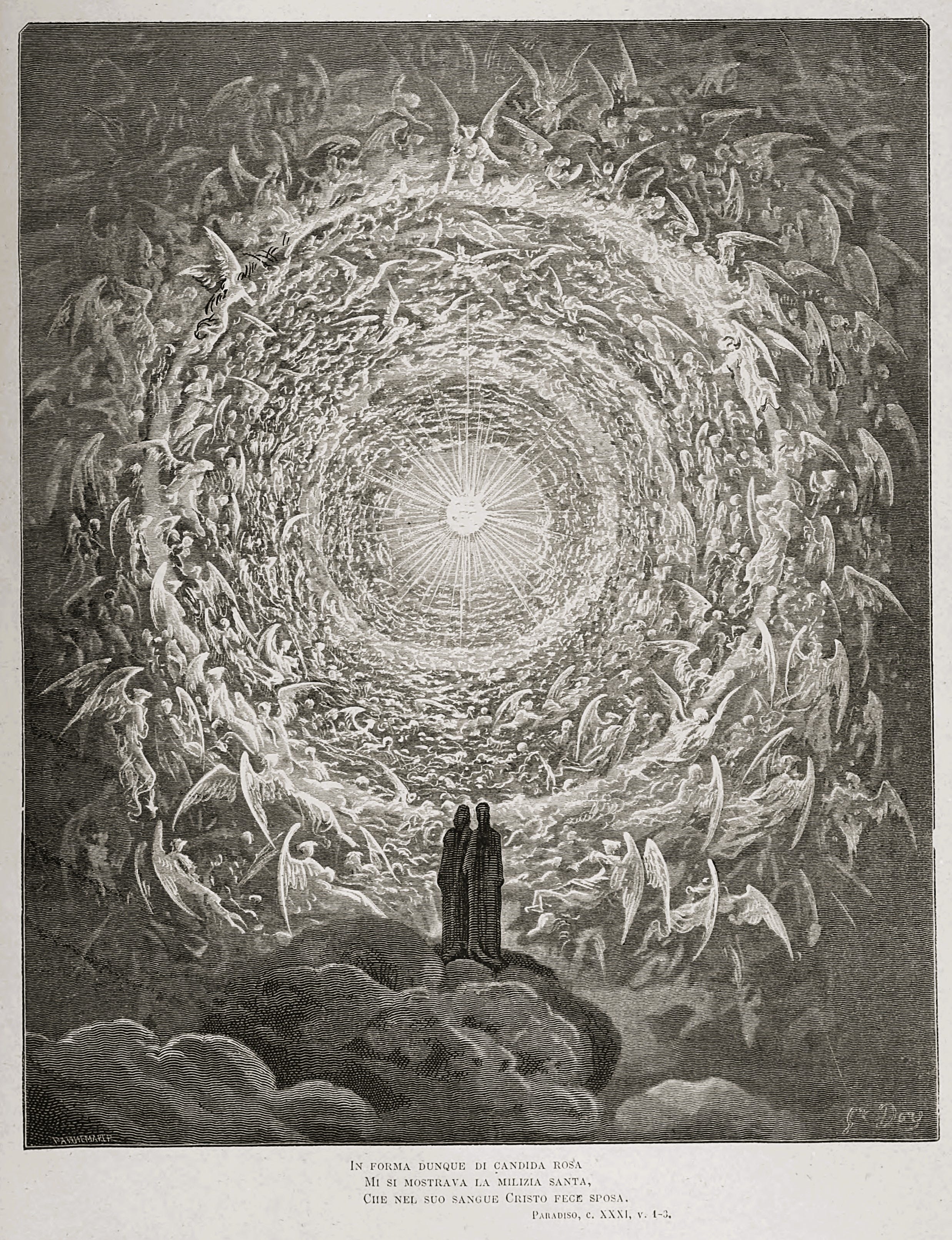
The Cult of the Saints: Diversty and Inclusion
The cult of the saints is inclusive across sex, class, and race. Women are present in abundance. An improbable number of them are valued primarily in terms of their virginity, but their stories are filled with the same heroic qualities as those of their male counterparts. They slay dragons, defy tyrants, embrace poverty, exhort and rebuke kings, popes, and bishops, reject marriage and domesticity in favour of radical lives on the frontline of their society’s struggles and sufferings. I share with those who lament the gender politics of the modern Catholic Church, but no other tradition in history has preserved so many women’s names, stories, writings, and accomplishments. The insipid models of femininity projected onto female saints today (and indeed, onto virtuous women in general) are a far cry from the viragos who populate The Golden Legend.
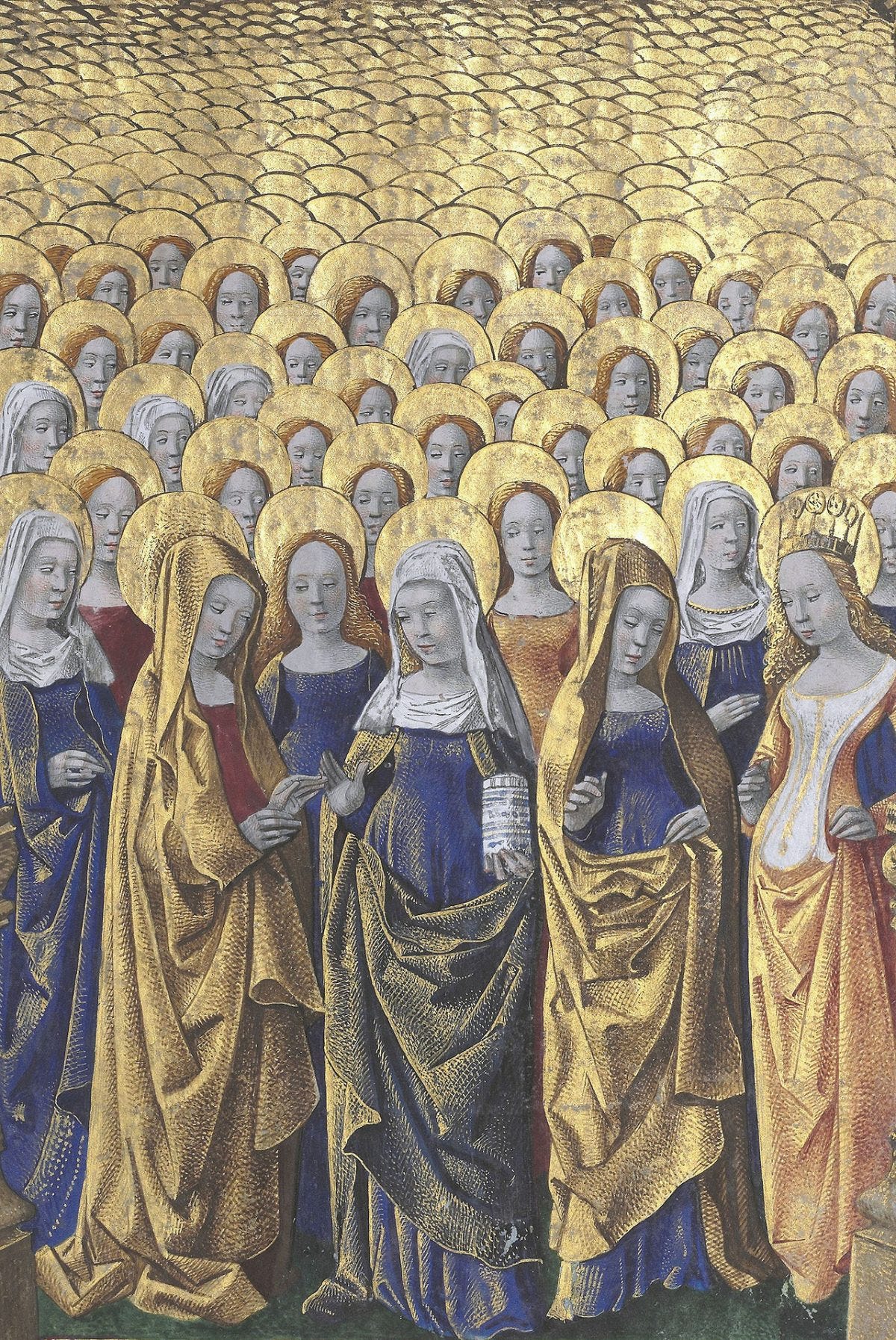

The cult of the saints includes many embellishments, myths, and legends. These are ways of glossing their stories to emphasise their enduring qualities, which are an antidote to the powers of tyranny, violence, and corruption that have ruled the world since time began, which all the posturing and rhetoric of progress have done nothing to change. Indeed, tyranny has flourished beneath the vacuous gloss of progressive liberalism.
Saints for today
We need to look for the saints among us, and they are not always where we expect to find them. They come from many cultures and religions, from many classes and walks of life. They are the Afghan women who sing and dance in defiance of the regime; the Iranians who were martyred in their thousands when they dared to rise up against their rulers. They are young women like Malala Yousef and Greta Thunberg who campaign tirelessly for a more just and sustainable world, and those like Virginia Guiffre and Gisèle Pelicot who refuse to be beaten into silence by the men who abuse them. They are the millions of anonymous individuals in every community who quietly care for the lonely and the vulnerable, the sick and the needy, who live the beatitudes in ways that cast the light of hope into the darkest corners of our world. These are the saints of everyday life, and they can be found in every person who battles their demons and dragons in the struggle to become their better selves.
My Presbyterian upbringing taught me to shun the cult of the saints as so much Catholic superstition, mumbo jumbo, and idolatry. As a convert, I’m consoled by the idea that there are saints in heaven watching over me, seeing my fumbling and bumbling along life’s path and praying for me in their compassion. The cult of the saints can inspire, encourage, entertain, amuse, and horrify, but it’s never boring.
So enjoying this! I’m still in the middle of the essay on St Bridget but am pausing to reflect here. As one of the women in the Art and Environment ministry at our church, for Lent i hung 2 Saint Bridget rush crosses over draped purple scarf length cloth on the church doors. In the entrance gathering area at the opening to the small chapel we placed a 4 foot cross and draped it with purple cloth in an encircling way spreading out at the bottom wi a small rush cross in the middle of the cross. Originally on the wall of this space there was a 2 foot metal statue of St Bridget and a welcoming plaque saying Saint Bridget Chapel. Now there is an icon of Saint Mark the Evangelist. The statue is cloistered in the chapel on a side wall. Out of sight, out of mind, but not out of heart.💚 This morning I was inspired here and searched for an icon of Saint Bridget, it will be delivered in 2 weeks. Thank you, Tina
Wise and wonderful words, Tina. As ever I learn so much from you x